
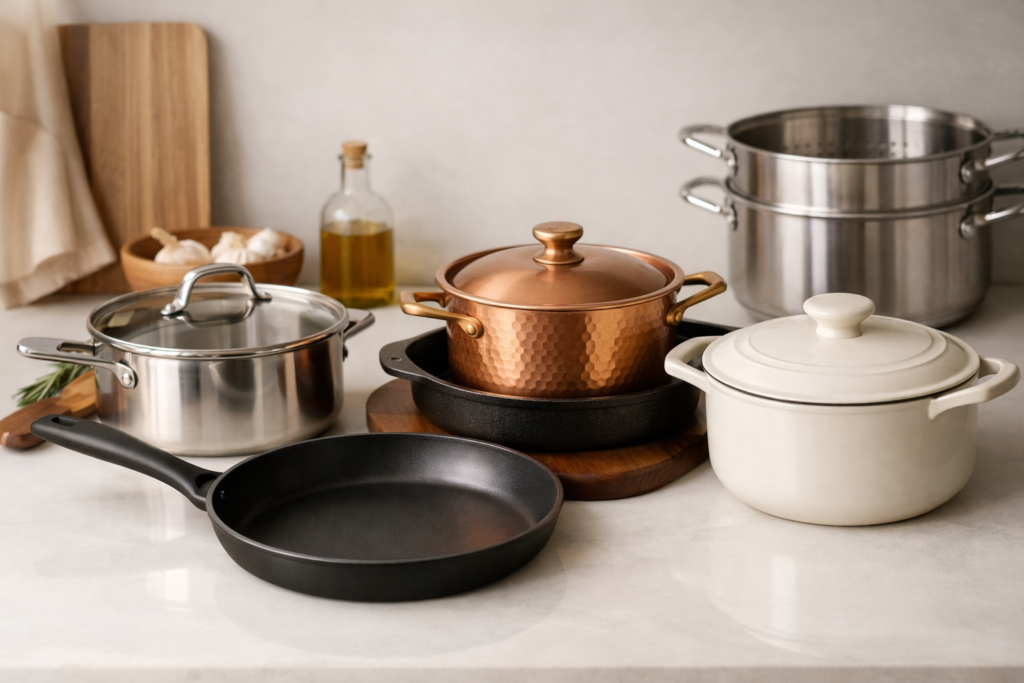
Understanding the Different Types of Cookware
Choosing the right cookware can significantly impact your success in the kitchen, whether you’re an amateur cook or a seasoned chef. The myriad of options available today can be overwhelming, but understanding the types of cookware and their specific uses can help you make informed decisions. This guide will delve into the various types of cookware, providing insights on how to select the best options for your cooking needs.
- Understanding the Different Types of Cookware
- Types of Cookware: A Quick Overview
- How to Choose the Right Cookware
- 1. Cooking Method
- 2. Heat Conductivity
- 3. Maintenance and Care
- 4. Compatibility with Appliances
- 5. Budget
- Common Cookware Types Explained
- 1. Stainless Steel Cookware
- 2. Non-Stick Cookware
- 3. Cast Iron Cookware
- 4. Ceramic Cookware
- 5. Enamel Cookware
- Frequently Asked Questions (FAQ)
- What is the best cookware for induction cooking?
- Can I use metal utensils on non-stick cookware?
- How do I care for cast iron cookware?
- What are the advantages of ceramic cookware?
- How do I know if my cookware is oven-safe?
- Where can I buy quality cookware?
- Conclusion
Open 2–3 listings and compare the same criteria (variants, returns, reviews).
- Best overall: Breville BMV600XL Sous Chef Food Processor
- Best value: Bodum Chambord French Press Coffee Maker, 1L
- Upgrade pick: Severin EK 3167 Electric Kettle
Types of Cookware: A Quick Overview
Cookware comes in various materials, each offering unique advantages and drawbacks. Here’s a quick comparison of some common types:
| Type of Cookware | Material | Best For | Care Instructions |
|---|---|---|---|
| Stainless Steel | Stainless Steel | General cooking, browning, and sautéing | Dishwasher safe, but hand washing recommended to maintain shine |
| Non-Stick | Coated Aluminum | Frying eggs, pancakes, and delicate foods | Use silicone or wooden utensils; hand wash to preserve coating |
| Cast Iron | Cast Iron | Slow cooking, frying, and baking | Season regularly; hand wash and dry immediately |
| Ceramic | Ceramic Coated | Low-fat cooking; even heat distribution | Hand wash recommended; avoid metal utensils |
| Enamel | Enamel-Coated Cast Iron | Slow cooking, braising | Hand wash; can be sensitive to scratches |
How to Choose the Right Cookware
Selecting the right cookware depends on several factors, including your cooking style, the types of meals you prepare, and the appliances you use. Here are some key considerations to help you make the best choice:
Before you click “buy”, scan the listing for a few decision-checks:
- Confirm the exact variant you need
- Check recent reviews for your use case
- Look at returns/warranty to reduce risk
1. Cooking Method
Consider the cooking methods you use most often. For example, if you primarily sauté vegetables, a stainless steel skillet or a non-stick pan might be ideal. If you enjoy baking, consider investing in a cast iron skillet or a ceramic baking dish.
2. Heat Conductivity
Different materials conduct heat differently. For instance, copper cookware heats up quickly and evenly, making it perfect for precise temperature control. However, it requires more maintenance. Stainless steel is durable and resistant to warping, making it a versatile choice for many cooks.
Want the fastest next step? Open one solid option and verify the key details in seconds.
3. Maintenance and Care
Some cookware requires more care than others. Cast iron cookware needs to be seasoned regularly, while non-stick pans should be handled carefully to avoid scratching. Assess how much time you’re willing to dedicate to maintaining your cookware.
4. Compatibility with Appliances
If you have specific appliances, such as an induction cooktop or an oven, ensure your cookware is compatible. Induction cooktops require magnetic cookware, while many ceramic and non-stick options are oven-safe up to certain temperatures.
If this sounds like you, start here and compare the details that matter to you.
Check on Amazon5. Budget
While it’s essential to invest in quality cookware, you can find options that fit different budgets. Consider starting with a few essential pieces and gradually expanding your collection as needed.
Common Cookware Types Explained
Now that you have a framework for choosing cookware, let’s explore each type in more detail:
Open the listing, check returns policy + warranty, and you’ll know quickly if it fits your needs.
Check on Amazon1. Stainless Steel Cookware
Stainless steel is known for its durability and resistance to rust and corrosion. This type of cookware is ideal for browning and deglazing, making it a favorite among professional chefs. It’s also dishwasher safe, though hand washing can help maintain its shine.
2. Non-Stick Cookware
Non-stick pans are coated with a layer that prevents food from sticking, making them perfect for cooking delicate items like eggs and pancakes. When using non-stick cookware, opt for silicone or wooden utensils to prevent damage to the coating.
Open 2–3 listings and compare the same criteria (variants, returns, reviews).
- Best overall: Bodum Chambord French Press Coffee Maker, 1L
- Best value: Hario V60 Ceramic Coffee Dripper, Size 02
- Upgrade pick: Breville BMV600XL Sous Chef Food Processor
3. Cast Iron Cookware
Cast iron is excellent for slow cooking, frying, and baking. It retains heat exceptionally well, making it ideal for searing meats. However, cast iron requires seasoning to maintain its non-stick properties and prevent rust.
4. Ceramic Cookware
Ceramic cookware is popular for its natural non-stick properties and even heat distribution. It is an excellent option for low-fat cooking, allowing you to make healthy meals without excess oil.
Before you click “buy”, scan the listing for a few decision-checks:
- Confirm the exact variant you need
- Check recent reviews for your use case
- Look at returns/warranty to reduce risk
5. Enamel Cookware
Enamel-coated cast iron combines the heat retention of cast iron with an easy-to-clean enamel finish. This type of cookware is perfect for braising and slow-cooking, but it can be more delicate than traditional cast iron.
Frequently Asked Questions (FAQ)
What is the best cookware for induction cooking?
The best cookware for induction cooking is made of magnetic materials like cast iron or stainless steel. Non-magnetic cookware will not work on induction cooktops.
Want the fastest next step? Open one solid option and verify the key details in seconds.
Can I use metal utensils on non-stick cookware?
It is not recommended to use metal utensils on non-stick cookware, as they can scratch and damage the coating. Opt for silicone or wooden utensils instead.
How do I care for cast iron cookware?
To care for cast iron cookware, wash it with hot water and a stiff brush. Avoid soap unless necessary. After cleaning, dry it immediately and apply a thin layer of oil to prevent rust.
If this sounds like you, start here and compare the details that matter to you.
Check on AmazonWhat are the advantages of ceramic cookware?
Ceramic cookware offers excellent heat distribution and is typically free of harmful chemicals found in some non-stick coatings. It is also highly resistant to scratching.
How do I know if my cookware is oven-safe?
Check the manufacturer’s guidelines or labels on the cookware. Generally, stainless steel and cast iron are oven-safe, while some non-stick and plastic handles may not be.
Open the listing, check compatibility/size + warranty, and you’ll know quickly if it fits your needs.
Check on AmazonWhere can I buy quality cookware?
You can find quality cookware at various retailers, both online and in-store. Consider checking reputable marketplaces for a wide selection of brands and types.
For your convenience, you can browse a variety of cookware options here: Quality Cookware Options.
Open 2–3 listings and compare the same criteria (variants, returns, reviews).
- Best overall: Hario V60 Ceramic Coffee Dripper, Size 02
- Best value: Baratza Encore Conical Burr Coffee Grinder
- Upgrade pick: Russell Hobbs 22740-56 Compact Sandwich Maker
Conclusion
Understanding the different types of cookware is essential for any home cook looking to enhance their culinary skills. By considering your cooking methods and the specific features of each type, you can choose the best cookware to suit your needs. Remember, investing in quality cookware will not only improve your cooking but also make the experience more enjoyable.
For more expert cooking tips and kitchen appliance advice, stay tuned to Kitchen Appliances Tips!
Before you click “buy”, scan the listing for a few decision-checks:
- Confirm the exact variant you need
- Check recent reviews for your use case
- Look at returns/warranty to reduce risk
Disclosure: This post contains affiliate links. If you buy through them, we may earn a commission at no extra cost to you.