
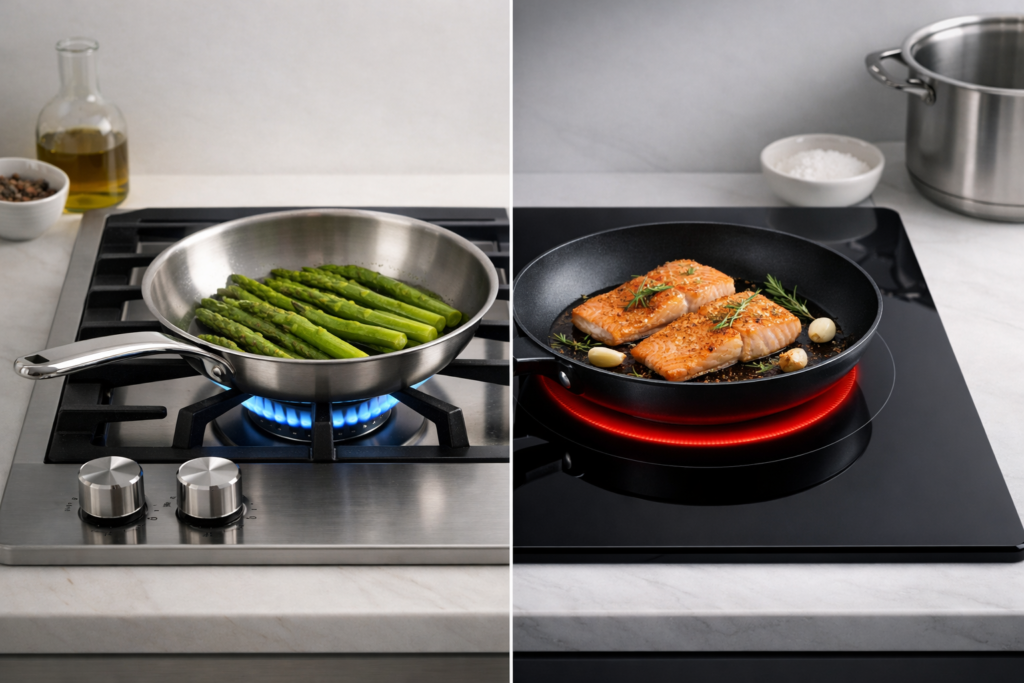
Comparing Conventional vs. Induction Cooktops: Which is Right for You?
When it comes to cooking, the choice of cooktop can significantly impact your culinary experience. With advances in technology, induction cooktops have gained popularity, but conventional cooktops still hold a strong position in many kitchens. Understanding the differences, advantages, and disadvantages of these two types can help you make an informed decision. In this article, we will explore the key features of induction cooktops vs conventional cooktops, helping you choose the best option for your cooking style.
- Understanding Cooktop Types
- Comparison Criteria
- Pros and Cons of Conventional Cooktops
- Advantages:
- Disadvantages:
- Pros and Cons of Induction Cooktops
- Advantages:
- Disadvantages:
- How to Choose the Right Cooktop for Your Kitchen
- 1. Cooking Style
- 2. Kitchen Space
- 3. Budget
- 4. Energy Efficiency
- 5. Safety Considerations
- Frequently Asked Questions
- 1. Can I use my existing cookware on an induction cooktop?
- 2. Are induction cooktops worth the investment?
- 3. Do induction cooktops require special installation?
- 4. How do I clean induction cooktops?
- 5. Are there any health risks associated with induction cooking?
- Conclusion
Want the fastest next step? Open one solid option and verify the key details in seconds.
Understanding Cooktop Types
Cooktops can generally be categorized into two main types: conventional and induction. Conventional cooktops typically use gas or electric coils to generate heat, while induction cooktops use electromagnetic technology to heat cookware directly. Below, we provide a detailed comparison to help clarify these systems.
Comparison Criteria
| Criteria | Conventional Cooktops | Induction Cooktops |
|---|---|---|
| Heating Method | Gas flames or electric coils | Electromagnetic induction |
| Heating Speed | Slower (depends on burner type) | Faster (instant heat) |
| Temperature Control | Gradual adjustments | Precise and immediate adjustments |
| Energy Efficiency | Less efficient | Highly efficient |
| Safety | Open flame hazards | Cool to the touch when not in use |
| Cookware Compatibility | All types of cookware | Magnetic cookware only |
| Cleaning Ease | Varies (depends on surface type) | Easy (flat surface) |
| Cost | Generally lower | Generally higher |
Pros and Cons of Conventional Cooktops
Conventional cooktops, whether gas or electric, have their own set of advantages and disadvantages.
Open the listing, check latest reviews + compatibility/size, and you’ll know quickly if it fits your needs.
Check on AmazonAdvantages:
- Versatility: They can accommodate a wide range of cookware, including non-magnetic materials.
- Visual Feedback: With gas cooktops, users can see the flame, providing immediate feedback on heat levels.
- Lower Initial Cost: Generally, conventional cooktops are more affordable than induction options.
Disadvantages:
- Energy Efficiency: Conventional methods waste more energy as heat escapes into the surrounding air.
- Heating Speed: Slower to heat up and cool down compared to induction.
- Safety Risks: Open flames increase the risk of burns and kitchen fires.
Pros and Cons of Induction Cooktops
Induction cooktops are often praised for their modern technology and efficiency.
Advantages:
- Efficiency: Induction cooktops convert about 90% of their energy into heat, making them highly energy-efficient.
- Speed: They heat up quickly, often boiling water faster than conventional cooktops.
- Safety: The surface remains cool to the touch, reducing burn risks.
Disadvantages:
- Cookware Limitations: Only magnetic cookware is compatible, which may require replacing some pots and pans.
- Higher Cost: Initial investment is typically higher than for conventional cooktops.
- Noise: Some users report a humming noise when the cooktop is in use.
How to Choose the Right Cooktop for Your Kitchen
Choosing between a conventional and induction cooktop involves considering several factors. Here’s a guide to help you make the right decision:
If this sounds like you, start here and compare the details that matter to you.
Check on Amazon1. Cooking Style
If you enjoy precise temperature control and often cook elaborate meals, induction may be your best option. If you prefer the traditional way of cooking or need to use a variety of cookware, a conventional cooktop might be more suitable.
2. Kitchen Space
Consider the layout and design of your kitchen. Induction cooktops can be installed in spaces that don’t have gas lines, making them versatile for modern kitchens.
Open 2–3 listings and compare the same criteria (variants, returns, reviews).
3. Budget
Evaluate your budget, not just for the cooktop’s cost but also for the potential need to purchase new cookware if you opt for induction.
4. Energy Efficiency
If energy savings are a priority for you, induction cooktops generally offer better efficiency, which can save you money on utility bills in the long run.
Before you click “buy”, scan the listing for a few decision-checks:
- Confirm the exact variant you need
- Check recent reviews for your use case
- Look at returns/warranty to reduce risk
5. Safety Considerations
For households with children or pets, the safety features of induction cooktops can be a significant advantage.
Frequently Asked Questions
1. Can I use my existing cookware on an induction cooktop?
Only magnetic cookware, such as cast iron or certain stainless steels, will work on induction cooktops. Check if your current pots and pans are compatible.
Want the fastest next step? Open one solid option and verify the key details in seconds.
2. Are induction cooktops worth the investment?
Many users find that the speed, efficiency, and safety of induction cooktops justify the higher cost, especially for avid cooks.
3. Do induction cooktops require special installation?
While induction cooktops can often be installed similarly to conventional ones, they may require specific electrical configurations. Always consult a professional for installation.
Open the listing, check compatibility/size + compatibility/size, and you’ll know quickly if it fits your needs.
Check on Amazon4. How do I clean induction cooktops?
Induction cooktops are generally easy to clean. Because the surface remains cool, spills do not burn on as easily. A simple wipe with a damp cloth and mild cleaner should suffice.
5. Are there any health risks associated with induction cooking?
Induction cooking is widely considered safe, but those with pacemakers should consult a doctor, as the electromagnetic field may interfere with some devices.
If this sounds like you, start here and compare the details that matter to you.
Check on AmazonConclusion
In the debate of induction cooktops vs conventional cooktops, the choice ultimately depends on your cooking preferences, budget, and kitchen layout. Both types have their unique benefits and drawbacks, making it essential to weigh your options carefully. Whether you prefer the traditional methods of cooking or the modern efficiency of induction, knowing your needs will guide you to the right choice for your kitchen.
For those looking to explore induction cooktops further, consider checking out options on Amazon or eBay.
Open 2–3 listings and compare the same criteria (variants, returns, reviews).
Disclosure: This post contains affiliate links. If you buy through them, we may earn a commission at no extra cost to you.
### Update
As of 2023, both conventional and induction cooktops have continued to evolve, with new models offering enhanced features such as smart technology integration, which allows users to control their cooktops via smartphones or voice assistants. Additionally, there is an increasing focus on sustainability, with many manufacturers exploring eco-friendly materials and energy sources. Furthermore, consumer preferences have shifted towards ease of use and maintenance, prompting both types of cooktops to incorporate user-friendly designs and easy-clean surfaces.
Want the fastest next step? Open one solid option and verify the key details in seconds.
### FAQ
**1. What types of cookware can be used on induction cooktops?**
Induction cooktops require cookware that is ferrous (magnetic) to work effectively. This typically includes cast iron, stainless steel, and certain types of enamel-coated cookware. Non-magnetic materials, like aluminum or glass, will not work unless they have a magnetic base.
**2. Are induction cooktops safer than conventional cooktops?**
Yes, induction cooktops are generally considered safer because they do not have open flames and the cooktop surface remains cool to the touch when not in use. This reduces the risk of burns and fire hazards.
Open the listing, check latest reviews + variants, and you’ll know quickly if it fits your needs.
Check on Amazon**3. Can induction cooktops be used during power outages?**
Induction cooktops require electricity to function, so they will not work during a power outage. In contrast, gas conventional cooktops can still be used if the gas supply is available.
**4. How do I clean an induction cooktop?**
Cleaning an induction cooktop is straightforward due to its flat surface. Most spills can be wiped away with a damp cloth. For tougher stains, a gentle cleaner can be used without scratching the surface.
**5. What are the energy savings associated with induction cooktops?**
Induction cooktops are typically more energy-efficient than conventional cooktops because they heat cookware directly rather than the surrounding air. This can lead to lower energy consumption and faster cooking times.
**6. Are there any downsides to using induction cooktops?**
While induction cooktops offer many advantages, some downsides include the need for compatible cookware and a generally higher upfront cost. Additionally, users may experience a learning curve when adjusting to the rapid heating and precise temperature control.