
Introduction
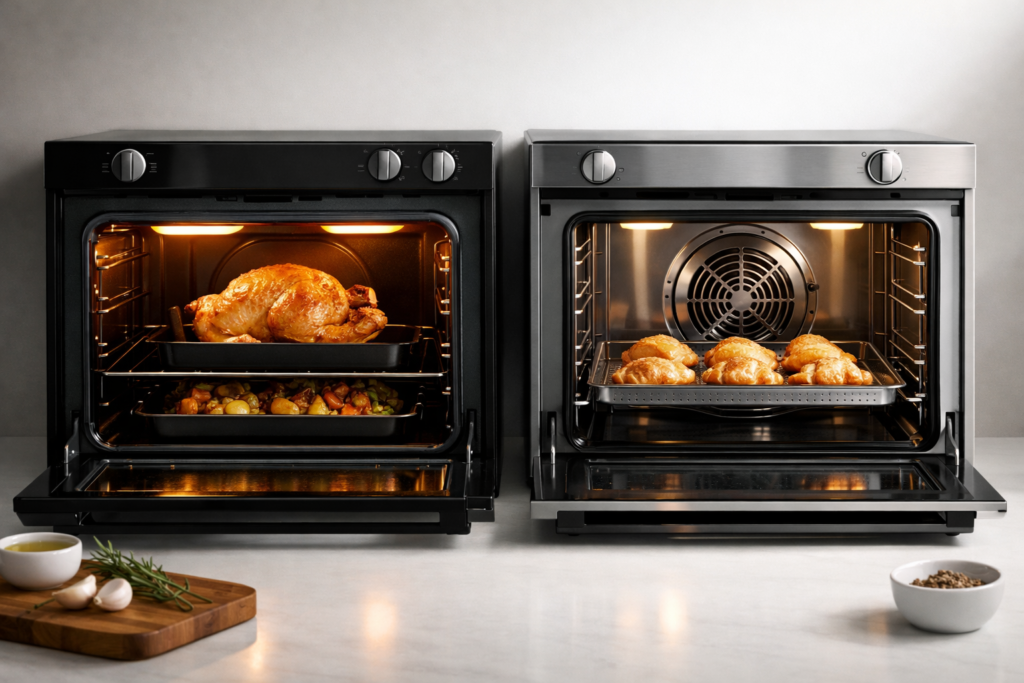
If you’re in the market for a new oven, you might be wondering about the differences between conventional and convection ovens. Each type has its unique benefits, and understanding these can greatly enhance your cooking experience. Whether you are baking cookies, roasting vegetables, or preparing a holiday feast, knowing which oven suits your needs can save you time and improve your results.
- Introduction
- Understanding Conventional Ovens
- Advantages of Conventional Ovens
- Exploring Convection Ovens
- Advantages of Convection Ovens
- Comparative Decision Guide
- How to Choose the Right Oven for You
- Common FAQs
- 1. Can I use convection settings for all my recipes?
- 2. Are convection ovens good for baking?
- 3. Can I roast meats in a conventional oven?
- 4. What maintenance do I need for each type of oven?
- 5. How do I know which type of oven is best for my cooking needs?
- Conclusion
If this sounds like you, start here and compare the details that matter to you.
Check on AmazonUnderstanding Conventional Ovens
Conventional ovens, often referred to as traditional ovens, utilize heating elements at the top and bottom of the oven compartment. They work by creating a static heat environment, which can be ideal for some cooking methods.
Advantages of Conventional Ovens
- Better for Baking: They provide even baking, especially for recipes that require a stable temperature, such as cakes and bread.
- Cost-Effective: Generally, conventional ovens are less expensive to purchase and maintain than convection models.
- Simplicity of Use: They tend to have straightforward controls, making them user-friendly for those who may not want to deal with advanced settings.
Exploring Convection Ovens
Convection ovens take cooking a step further by adding a fan and an exhaust system that circulate hot air around the food. This technology helps food cook more evenly and often more quickly.
Before you click “buy”, scan the listing for a few decision-checks:
- Confirm the exact variant you need
- Check recent reviews for your use case
- Look at returns/warranty to reduce risk
Advantages of Convection Ovens
- Faster Cooking Times: The circulating air cooks food more evenly and efficiently, reducing cooking times by about 25%.
- Even Browning: The airflow promotes even browning, which is particularly beneficial for roasted meats and baked goods.
- Versatility: They can handle multiple dishes at once without the risk of flavor transfer.
Comparative Decision Guide
| Criteria | Conventional Ovens | Convection Ovens |
|---|---|---|
| Cooking Time | Standard | Faster |
| Baking | Excellent for baking | Good, but may require adjustments |
| Price | Generally lower | Typically higher |
| Energy Efficiency | Less efficient | More efficient due to faster cooking |
| Ease of Use | Simple controls | May require learning curve |
| Versatility | Good | Excellent for multiple dishes |
How to Choose the Right Oven for You
Choosing between a conventional and a convection oven depends on several factors:
- Cooking Style: If you often bake items like bread or cakes, a conventional oven may be your best bet. If you frequently roast meats or cook multiple dishes simultaneously, consider a convection oven.
- Budget: Evaluate your budget for both initial purchase and long-term energy efficiency. Conventional ovens are often more budget-friendly upfront.
- Kitchen Space: Consider the space available in your kitchen. Convection ovens may require additional ventilation due to the internal fan.
- Learning Curve: If you prefer straightforward cooking, a conventional oven may be less intimidating than a convection oven, which might require some adjustment to cooking times and temperatures.
Common FAQs
1. Can I use convection settings for all my recipes?
While many recipes can be adapted for convection cooking, it’s important to reduce the cooking time and temperature by about 25% compared to conventional ovens. Always check for doneness early.
Open 2–3 listings and compare the same criteria (variants, returns, reviews).
- Best overall: find convection ovens here
- Best value: find convection ovens here
- Upgrade pick: find convection ovens here
2. Are convection ovens good for baking?
Yes, convection ovens can be great for baking, but they may require some adjustments. For instance, cookies might spread differently, and cakes might rise more unevenly. It’s advisable to experiment until you find the right settings for your recipes.
3. Can I roast meats in a conventional oven?
Absolutely! Conventional ovens are excellent for roasting meats, providing a steady heat that results in juicy, well-cooked dishes.
Want the fastest next step? Open one solid option and verify the key details in seconds.
4. What maintenance do I need for each type of oven?
Both types of ovens need regular cleaning to avoid buildup of grease and food particles. For convection ovens, ensure that the fan and exhaust system are also clean to maintain efficiency.
5. How do I know which type of oven is best for my cooking needs?
Assess your cooking habits, preferences, and the types of dishes you prepare most often. The comparison guide above can help clarify which oven might be the better fit for you.
Open the listing, check compatibility/size + latest reviews, and you’ll know quickly if it fits your needs.
Check on AmazonConclusion
Choosing between a conventional oven and a convection oven boils down to your cooking style, budget, and kitchen space. Understanding what each type offers can help you make an informed decision that enhances your cooking experience. Whether you opt for the simplicity of a conventional oven or the efficiency of a convection model, both can bring delicious meals to your table.
For more information on kitchen appliances and choosing the right products for your needs, check out the FTC Consumer Advice.
If this sounds like you, start here and compare the details that matter to you.
Check on AmazonReady to elevate your cooking? Explore your options today!
Disclosure: This post contains affiliate links. If you buy through them, we may earn a commission at no extra cost to you.