
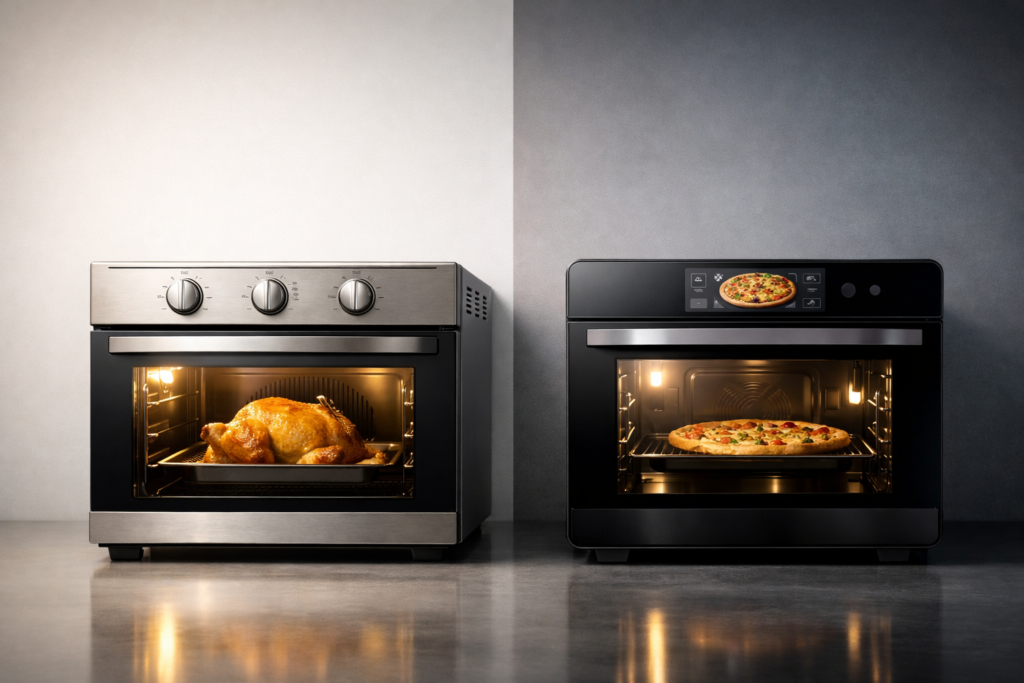
Comparing Conventional vs. Smart Ovens: Which Is Right for You?
In the ever-evolving world of kitchen appliances, ovens remain a central player for home cooks. Whether you’re a novice looking to bake your first loaf of bread or an experienced chef exploring new culinary avenues, the choice between a conventional oven and a smart oven can significantly impact your cooking experience. This guide delves into the pros and cons of each type, helping you make an informed decision tailored to your cooking habits and lifestyle.
- Comparing Conventional vs. Smart Ovens: Which Is Right for You?
- Understanding the Basics
- Comparison Criteria
- Pros and Cons of Conventional and Smart Ovens
- Conventional Ovens
- Smart Ovens
- How to Choose the Right Oven for Your Kitchen
- 1. Assess Your Cooking Habits
- 2. Consider Your Kitchen Space
- 3. Evaluate Your Budget
- 4. Think About Maintenance
- 5. Research Brands and Models
- FAQs
- What are some popular brands of smart ovens?
- Can a smart oven replace a conventional oven?
- Are smart ovens energy-efficient?
- Do smart ovens require a Wi-Fi connection?
- What should I look for in a conventional oven?
- Final Thoughts
Before you click “buy”, scan the listing for a few decision-checks:
- Confirm the exact variant you need
- Check recent reviews for your use case
- Look at returns/warranty to reduce risk
Understanding the Basics
Before diving into the comparison, it’s essential to understand what distinguishes conventional ovens from smart ovens.
- Conventional Ovens: These are traditional ovens that use gas or electric heat. They offer straightforward cooking capabilities without digital interfaces, focusing solely on baking, roasting, and broiling.
- Smart Ovens: Equipped with advanced technology, smart ovens can connect to your home Wi-Fi and be controlled through smartphone apps or voice assistants. They often feature specialized cooking modes, built-in sensors, and the ability to monitor cooking progress from afar.
Comparison Criteria
When deciding between conventional and smart ovens, consider the following criteria:
Open 2–3 listings and compare the same criteria (variants, returns, reviews).
- Best overall: smart oven reviews
- Best value: buy ovens now
- Upgrade pick: buy ovens now
| Feature | Conventional Ovens | Smart Ovens |
|---|---|---|
| Cooking Modes | Standard baking, broiling | Multiple modes (bake, roast, air fry, steam) |
| Control Interface | Manual dials and switches | Touch screen, app control, voice command |
| Preheat Time | Varies by model, generally longer | Often quicker with features like rapid preheat |
| Energy Efficiency | Less energy-efficient | More energy-efficient with smart features |
| Maintenance | May require manual cleaning | Self-cleaning options often available |
| Price Range | Generally more affordable | Higher initial investment |
Pros and Cons of Conventional and Smart Ovens
Conventional Ovens
Pros:
- Usually more affordable and straightforward.
- Familiar operation for those used to traditional cooking methods.
- Reliable performance with fewer technical issues.
- Less reliance on technology means fewer distractions while cooking.
Cons:
- Lacks advanced cooking modes and features.
- Manual operation can be less convenient.
- Longer preheating times.
- Generally less energy-efficient.
Smart Ovens
Pros:
- Versatile cooking options with numerous modes.
- Remote control capabilities for convenience.
- Energy-efficient features help save on utility bills.
- Self-cleaning options make maintenance easier.
Cons:
- Higher initial cost.
- Dependence on technology may lead to issues if the app malfunctions.
- Potentially overwhelming for users unfamiliar with digital interfaces.
- May require regular software updates.
How to Choose the Right Oven for Your Kitchen
Choosing between a conventional and a smart oven largely depends on your cooking style, budget, and comfort with technology. Here are some actionable steps to help you decide:
1. Assess Your Cooking Habits
Are you a casual cook or a culinary enthusiast? If you frequently bake or host gatherings, a smart oven’s versatile features may be beneficial. Conversely, if you cook simply for daily meals, a conventional oven should suffice.
Want the fastest next step? Open one solid option and verify the key details in seconds.
2. Consider Your Kitchen Space
Smart ovens can come in various sizes and may require more space for their advanced features. Measure your kitchen to ensure the oven you choose fits comfortably.
3. Evaluate Your Budget
Smart ovens generally come at a higher price point. Weigh the features you’ll use against the cost. If the advanced features will enhance your cooking, it may be worth the investment.
Open the listing, check compatibility/size + compatibility/size, and you’ll know quickly if it fits your needs.
Check on Amazon4. Think About Maintenance
Smart ovens often have self-cleaning options, which can save you time. If you prefer less hassle, a smart oven could be a better fit.
5. Research Brands and Models
Look into reputable brands that offer the features you’re interested in. Read customer reviews and consider the warranty options available. smart oven reviews
If this sounds like you, start here and compare the details that matter to you.
Check on AmazonFAQs
What are some popular brands of smart ovens?
Some popular brands include KitchenAid, Breville, Samsung, and LG. Each brand offers unique features and cooking modes, so be sure to explore their offerings.
Can a smart oven replace a conventional oven?
Yes, a smart oven can serve as a direct replacement for a conventional oven, offering similar functions along with additional features like app connectivity and specialized cooking modes.
Before you click “buy”, scan the listing for a few decision-checks:
- Confirm the exact variant you need
- Check recent reviews for your use case
- Look at returns/warranty to reduce risk
Are smart ovens energy-efficient?
Many smart ovens are designed to be more energy-efficient than conventional models, utilizing advanced technology to optimize cooking times and energy usage.
Do smart ovens require a Wi-Fi connection?
While most smart ovens function best with a Wi-Fi connection for app control and updates, some basic functions can still be used without it.
Open 2–3 listings and compare the same criteria (variants, returns, reviews).
- Best overall: buy ovens now
- Best value: smart oven reviews
- Upgrade pick: smart oven reviews
What should I look for in a conventional oven?
When choosing a conventional oven, look for features like even heat distribution, reliable temperature control, and ease of cleaning. Consider your cooking needs and preferences to ensure it meets your expectations.
Final Thoughts
Choosing between a conventional and a smart oven doesn’t have to be overwhelming. By understanding the features, benefits, and limitations of each type, you can make an informed decision that aligns with your cooking style and kitchen needs. Whether you opt for the simplicity of a conventional oven or the advanced capabilities of a smart oven, both can enhance your culinary adventures.
Want the fastest next step? Open one solid option and verify the key details in seconds.
Ready to explore your options? Discover a range of ovens that fit your needs and elevate your cooking experience. buy ovens now
Disclosure: This post contains affiliate links. If you buy through them, we may earn a commission at no extra cost to you.
Open the listing, check variants + variants, and you’ll know quickly if it fits your needs.
Check on Amazon